
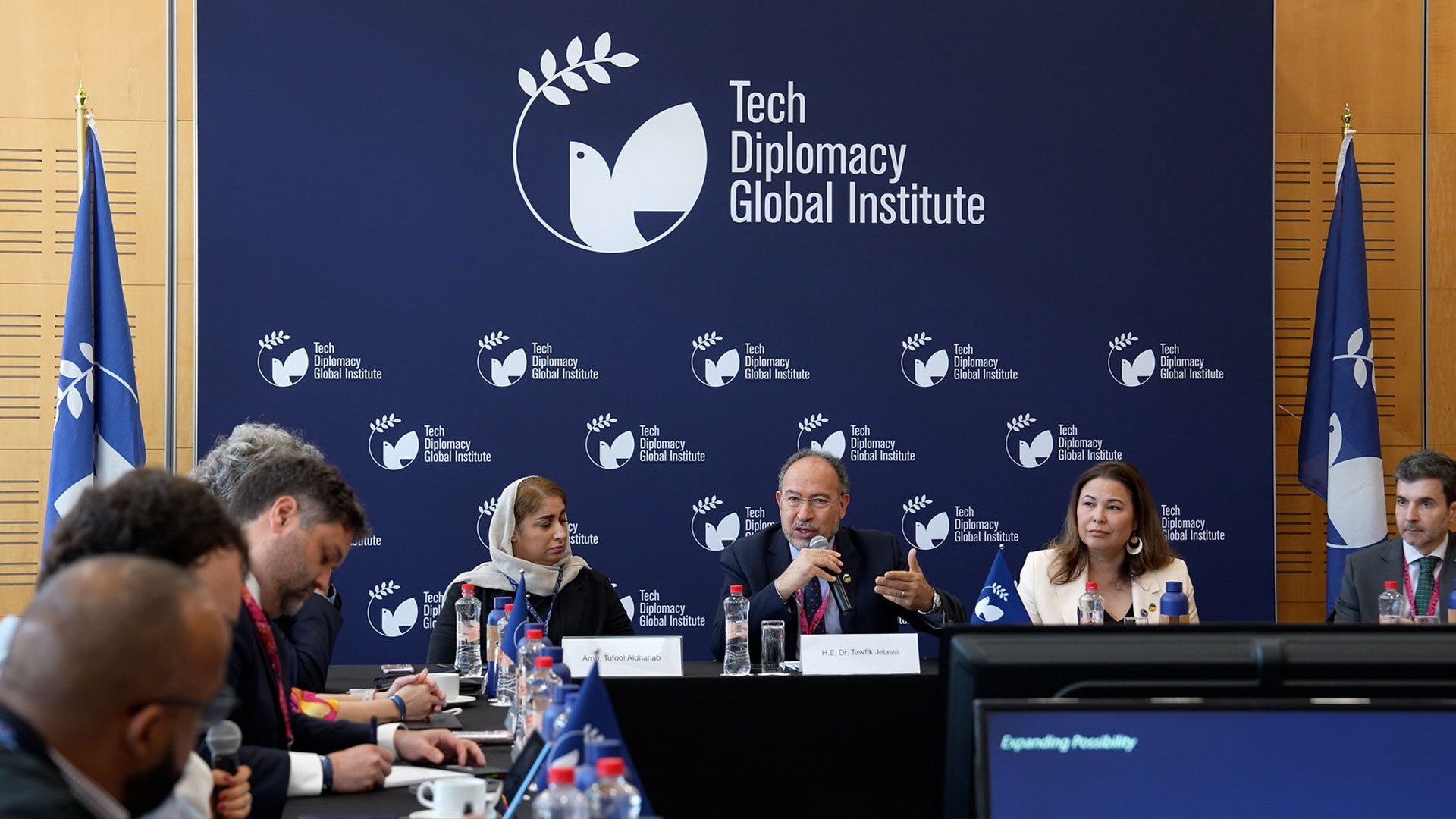
The question the Tech Diplomacy Global Institute brought to Cape Town was deceptively simple: what if the Global South did more than participate in the digital age? What if it co-authored the rules?
That question shaped every conversation at the first TDGI Africa Symposium — a gathering of diplomats, technologists, policymakers, private-sector leaders, academics, and youth advocates convened on April 27 in Cape Town, alongside the Women in Tech Global Summit 2026. What emerged across roundtables, foresight labs, and fishbowl reflections was not a list of problems. It was a collective reorientation — from catching up to shaping.
The word that defined the day was co-authorship.
Not consultation. Not symbolic inclusion. Not a seat at a table designed by others. Authorship means having a genuine say in what gets built, how it is governed, whose interests it serves, and which values it embeds. The aspiration set at the opening of the Symposium was clear: a digital future that is sovereign, sustainable, inclusive, and human-centered. The conversations that followed tested what it would actually take to get there.
Presence is not enough. Authorship requires leverage.
One of the most important distinctions to surface was between being in the room and shaping the room. The Global South is already present in the digital age — as a source of demographic scale, youth, creativity, lived experience, and policy innovation. That presence is real. But presence alone does not translate into influence over the rules, standards, and infrastructure that define the digital order.
Authorship, as the conversations made clear, requires three things: voice in shaping norms, leverage in shaping coalitions and negotiations, and design power in shaping the systems themselves. It means helping design the table, not just sitting at it.
Digital sovereignty is agency, not isolation.
A theme that returned throughout the day was digital sovereignty — and the importance of defining it clearly. Sovereignty in the digital age is not about closing borders or rejecting cooperation. It is about entering partnerships with clarity, confidence, and choice. It means knowing where your data sits, which systems are critical, which dependencies carry strategic risk, and which forms of cooperation strengthen rather than diminish your position.
In a world where many countries need investment, compute power, cloud infrastructure, and private-sector partnerships, the point is not to refuse engagement. It is to engage without becoming structurally disadvantaged. Digital sovereignty, in this sense, is not protectionism. It is agency.
Tech diplomacy is no longer optional statecraft.
Technology now shapes trade, security, foreign policy, regulation, infrastructure, and national positioning. That shift creates a new kind of diplomatic need — leaders who can speak both the language of technology and the language of statecraft.
This is the core challenge at the heart of TDGI’s mission. Governments need more than technical teams. They need diplomatic capability for the digital age: diplomats who understand technology, technologists who understand international relations, and institutions that can connect national priorities to global negotiations with confidence.
South-South coalitions are an underused source of power.
Many of the issues discussed in Cape Town are shared across the Global South: connectivity gaps, compute access, data governance, digital public infrastructure, skills shortages, and youth inclusion. That shared reality is not only a challenge — it is a source of potential leverage.
South-South coalitions can help countries exchange solutions, build common positions, pool demand, and approach multilateral negotiations with greater collective weight. A well-solved local problem can become a regional model. A regional model can become a negotiating position. As one participant put it, “Our secret weapon is human collaboration on a bigger scale.”
Institutions will shape the digital future more than technologies will.
Technology does not govern itself. Institutions do. And closing the gap between the speed of innovation and the pace of policymaking is one of the defining governance challenges of our time. The answer is not reckless speed — it is institutional agility. Governments that cannot align internally will struggle to negotiate externally. Building that internal capacity is where digital authorship begins.
Education, youth, and the question of what must remain human.
Two commitments ran through the day like a thread. The first was that digital skills are now a sovereignty issue. Infrastructure matters. But without people who can understand, question, govern, and improve the systems around them, infrastructure alone creates dependency rather than capability. Digital literacy is the foundation that makes everything else possible.
The second was about timing. Young people are not the future beneficiaries of the rules being set today — they are potential co-authors of those rules, right now. Bringing them in after the norms are written limits them to adaptation. Bringing them in early gives them the chance to shape the questions, safeguards, and values of the digital future they will inherit.
At the deepest level, the Symposium surfaced a question that ran beneath all others: what must remain human? The answer goes beyond ethics frameworks. It reaches into judgment, empathy, community, and the conditions that make society worth building in the first place — including the ability to create life, to allow people the grace of being forgotten, and to recognize that human limits are not only problems to overcome.
The digital future is not ahead of us. It is being written now.
The message from Cape Town aligns with everything TDGI was built to advance. Ambition is the desire to take part in the digital future. Authorship is the ability to shape it. The Global South already has the assets — scale, talent, lived experience, creativity, and urgency. The task now is to translate that relevance into influence.
The question is who holds the pen.
The Tech Diplomacy Global Institute, founded by Ayumi Moore Aoki, convened the first TDGI Africa Symposium on 27 April 2026 in Cape Town, South Africa.