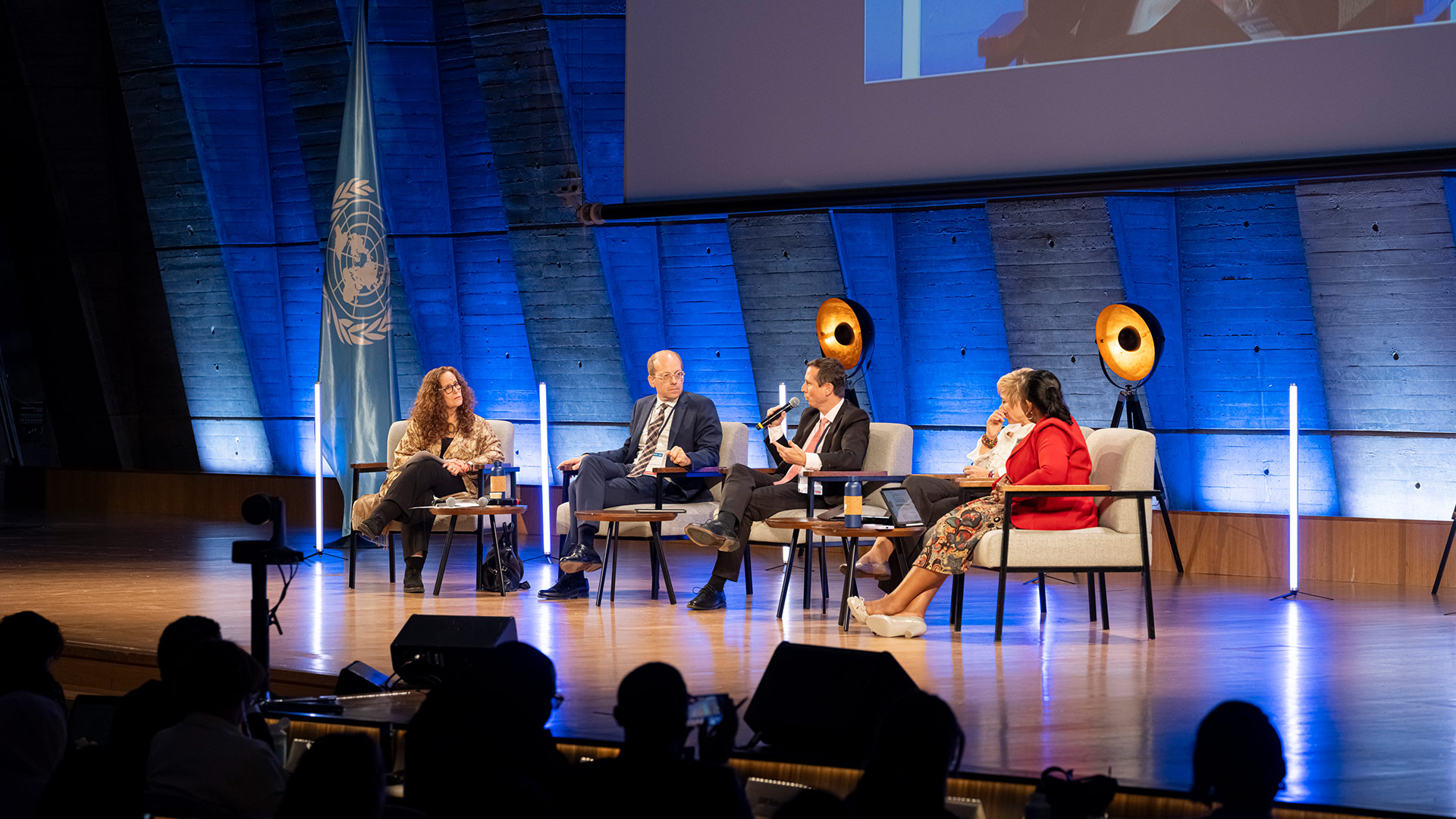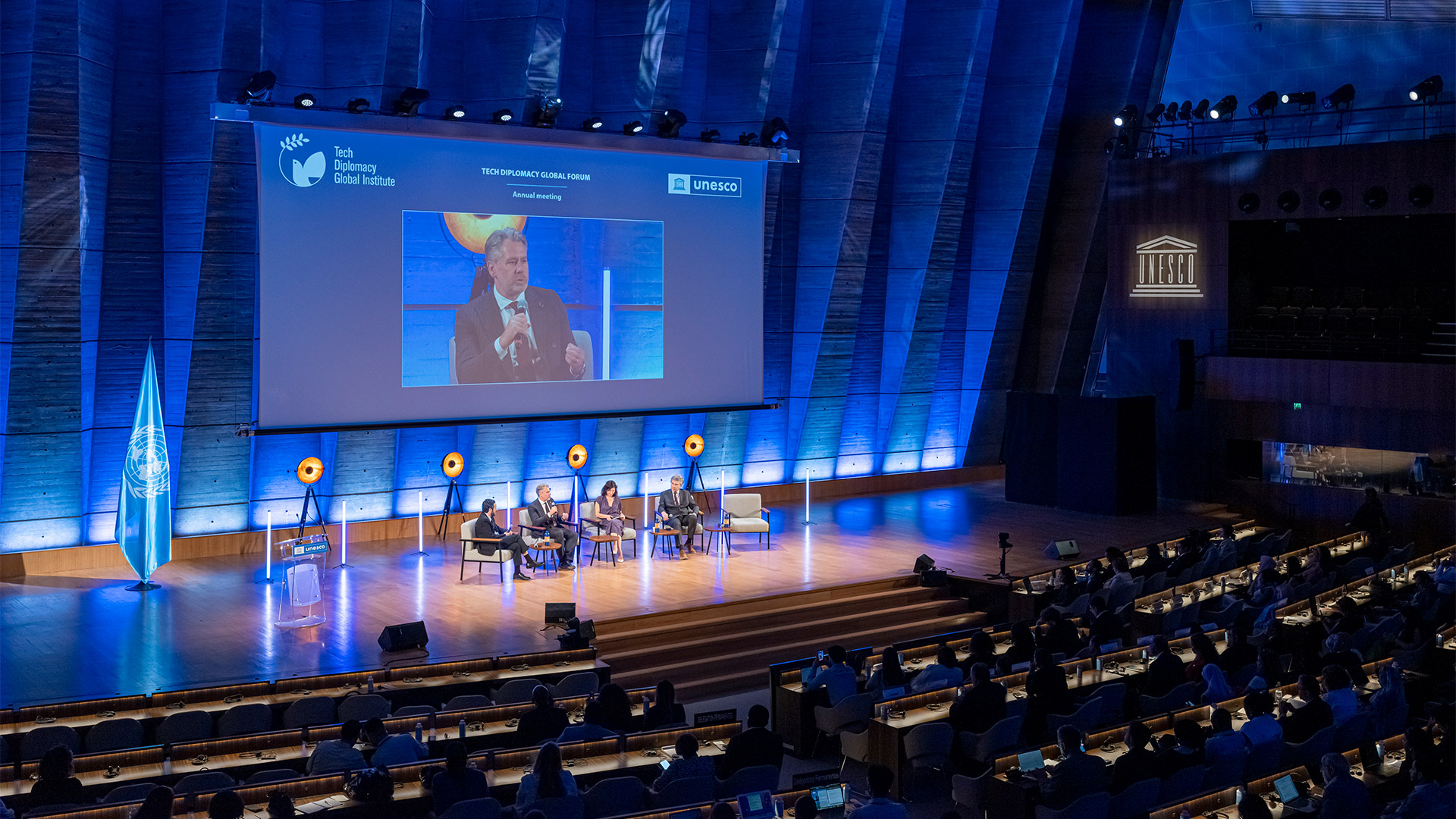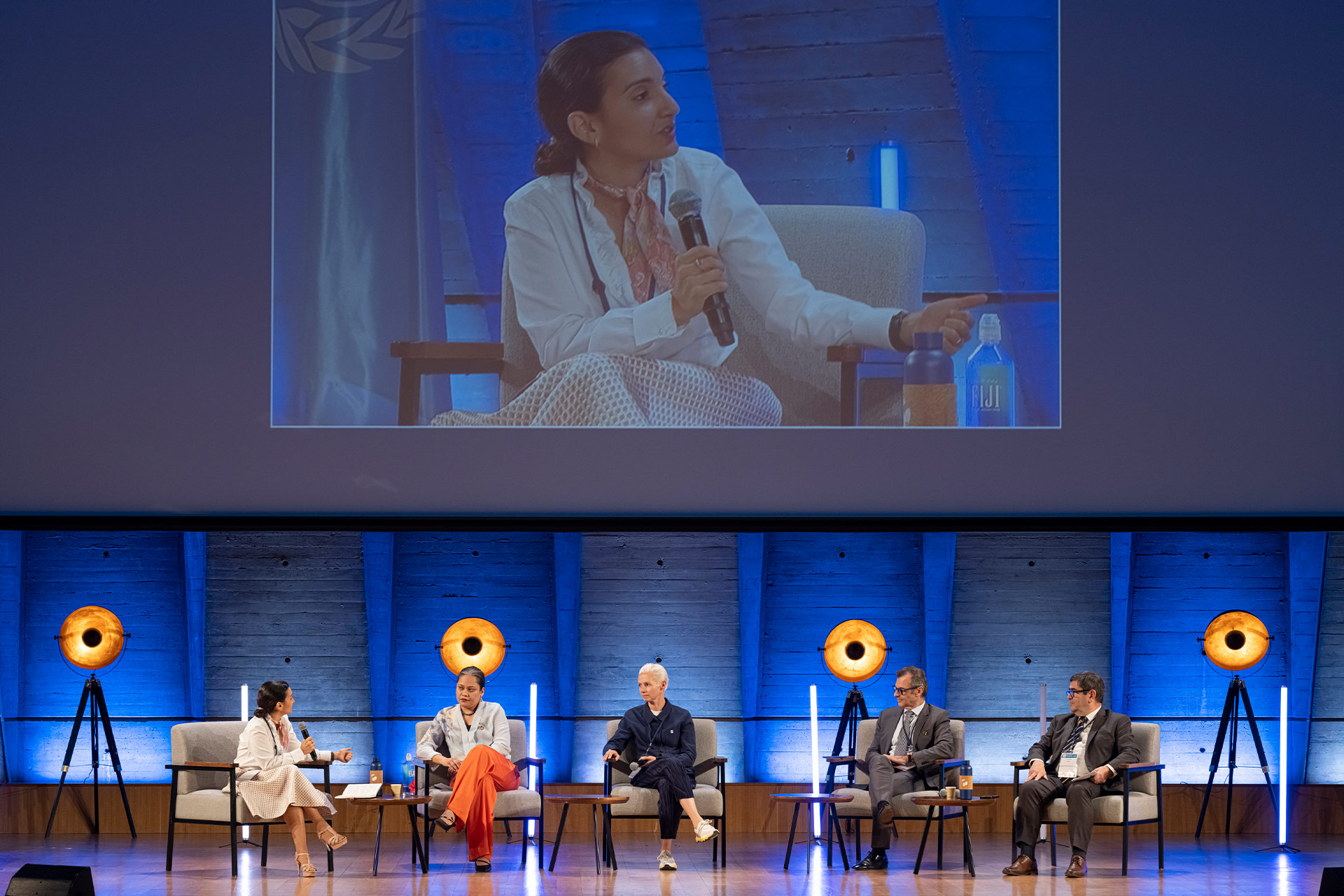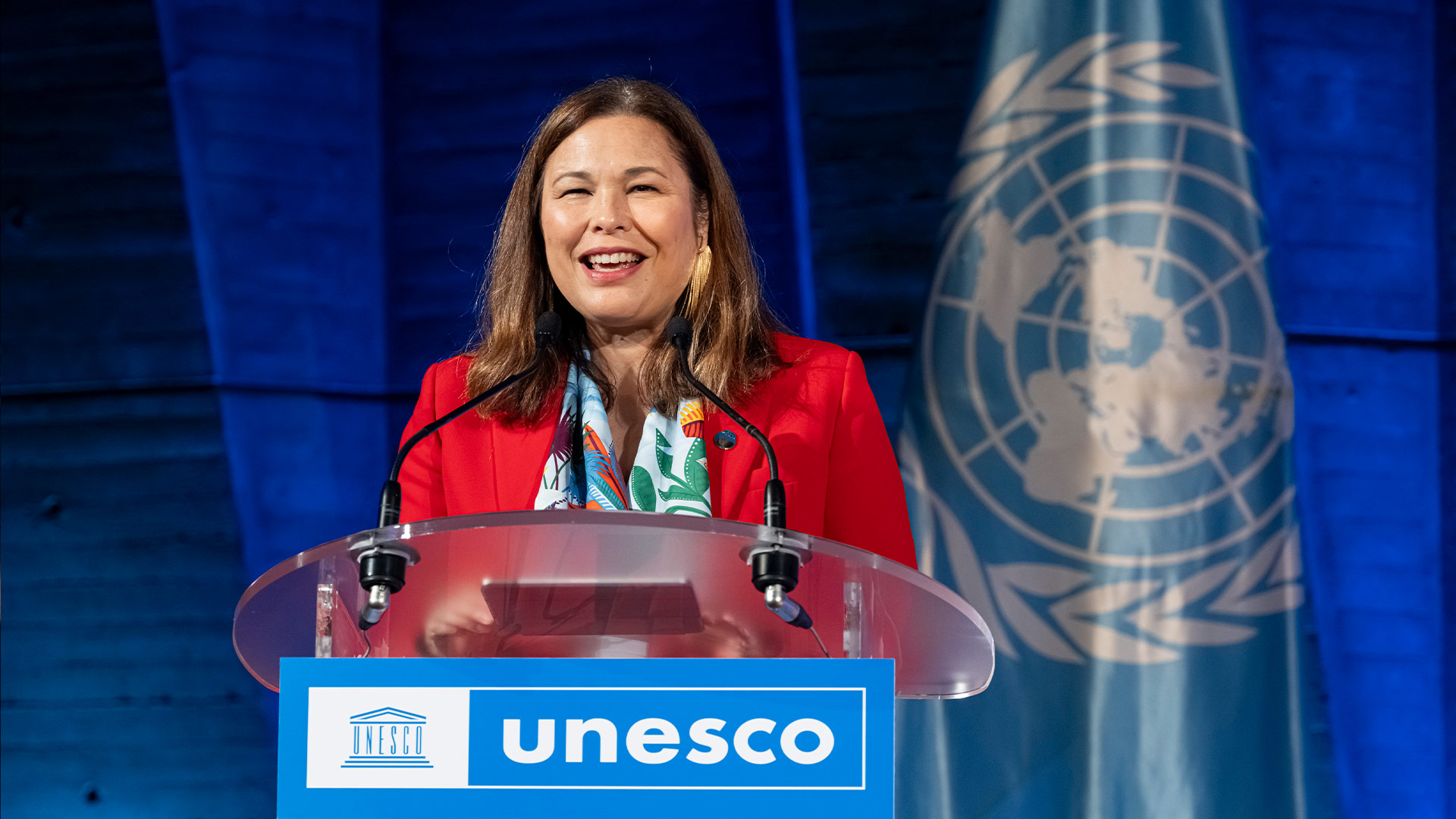
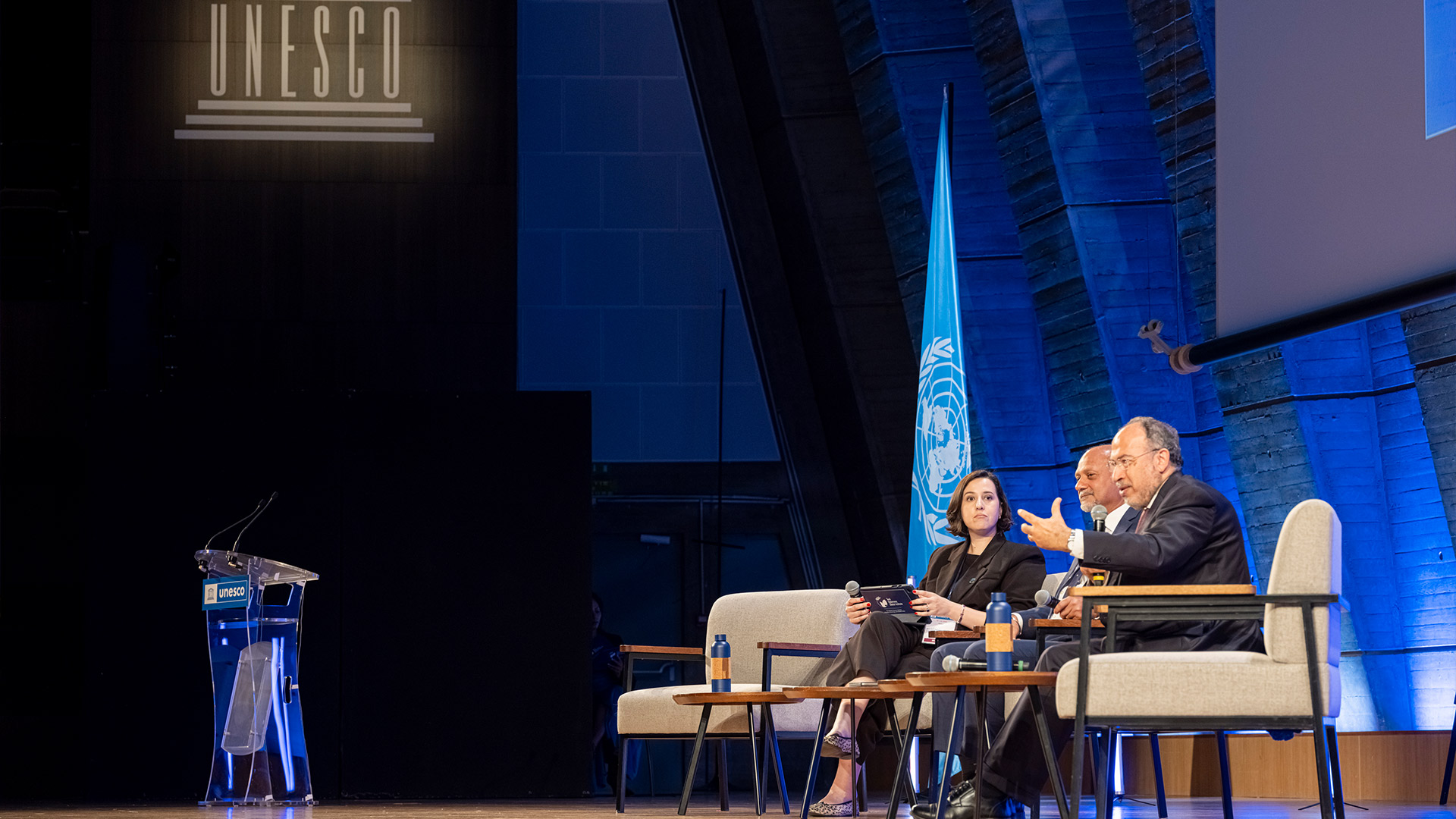
On 2 July 2026, Room I of UNESCO Headquarters in Paris hosted the second edition of the Tech Diplomacy Global Forum, convened by the Tech Diplomacy Global Institute in collaboration with UNESCO. Under the theme “Tech Diplomacy as Statecraft: Building Trust in a Fragmented Era,” the Forum gathered ministers, ambassadors, senior officials, technology leaders and scholars from every region of the world for a full day of deliberation on how nations can build the trust required to govern technology.
The setting carried its own meaning. UNESCO was founded on the conviction that if peace is to last, it must be built in the minds of women and men, beyond treaties and charters. Eight decades on, the collaboration between the Institute and UNESCO gave the Forum its purpose as much as its home: to ask what that idea now requires, in an age when so much of the human mind runs through machines.
Opening the Forum
Ayumi Moore Aoki, Founder and President of the Tech Diplomacy Global Institute, opened the Forum alongside Dr. Abou Amani, UNESCO Assistant Director-General for Sciences a.i.
Technology, she noted in her address, has left the domain of experts and entered the domain of statecraft. It shapes how nations compete and how they cooperate, how citizens are informed and misled, who holds power and who is subject to it. Yet the world that must govern these forces is pulling apart: rival regulations that do not speak to one another, an uneven distribution of computing power, talent and infrastructure, competing visions of artificial intelligence and data, and a widening gap between the speed of technology and the capacity of institutions to answer for it.
Against that fragmentation, the address set out the proposition that ran through the entire day: “Cooperation is not sentiment. Cooperation is strategy.” Trust cannot be declared into being; it has to be built, patiently and in good faith. And sovereignty, in this age, is not about being the largest power in the room. It is the capacity to choose one’s own dependencies — to decide who you rely on for what, and to keep the freedom to change course. By that measure, no nation is too small to be sovereign, and none is too large not to need others.
A Day of Statecraft in Practice
The programme translated that framing into practice. A high-level conversation with H.E. Gobind Singh Deo, Minister of Digital of Malaysia, and Dr. Tawfik Jelassi, Chair of the Institute’s Supervisory Board, examined how tech diplomacy moves from exclusive to inclusive policy. Leading voices including Casper Klynge, the world’s first Tech Ambassador, Dr. Rachel Adams, Prof. Corneliu Bjola and Prof. Sonja Schmer-Galunder debated equity in the governance of digital transformation, while an Oxford-style debate confronted the question of whether technology companies now shape global order as much as states do.
The day had opened in the morning with Codes Morpho, an artistic performance uniting dancers and the robot Nao, a reminder that the encounter between humanity and its machines is cultural as much as it is political. The afternoon gathered pioneers of the tech ambassador profession, among them H.E. Helen Popp of Estonia, H.E. Ana Maria Pesantes of Ecuador and Dr. Tobias Feakin, former Tech Ambassador of Australia, before turning to AI in foreign policy and to digital sovereignty for open societies. The day also saw the announcement of the Global 5X AI Impact Accelerator.

From an Idea to an Institution
The closing session, held with Dr. Shaofeng Hu, Director of UNESCO’s Division of Research, Ethics and Inclusion, presented the Tech Diplomacy Agenda and reflected on the distance travelled in a single year.
What began as an idea has become an institution. Since the first Forum gathered more than five hundred participants, the Tech Diplomacy Global Institute has carried the work forward: to the Samarkand Declaration, to Davos, to its Africa symposium in Cape Town, so that the developing world is heard at the beginning of the conversation and not only at its end, to the case for Tech Ambassadors, and to the Global Executive Program, which is training a new profession of leaders fluent in both diplomacy and technology.
“We are told, again and again, that we must choose: between innovation and ethics, between sovereignty and cooperation, between ambition and responsibility,” Ayumi Moore Aoki told the room. “We do not accept those choices. Guardrails are not found; they are built, by hand, by people willing to sit in the same room and do the patient work.”
The second edition of the Forum was not a conference to attend, but work to begin. The future will not be written by technology alone. It will be written by the strength of what we build around it, and by the people willing to build it together.
—
The Tech Diplomacy Global Institute works with governments and international organisations to build diplomatic capacity for the digital age. Ayumi Moore Aoki, its Founder-President, is also the Founder and CEO of Women in Tech® Global, a global organisation advancing inclusion and leadership in the technology sector.